

Neck pain that builds through the working day and disappears by Sunday is not caused by your posture. It is caused by how long you hold whatever posture you are in. That distinction changes what you should do about it, and the fix is closer to a movement habit and a short strength block than it is to a new chair.
I treat a lot of necks. It is the presentation I see most, and it is the one where people arrive with the most bad information already installed. So rather than another article telling you to sit up straight, here is the actual routine I give people, with the numbers.
Studies comparing sitting posture in people with and without neck pain keep finding far less difference than anyone expects. Plenty of people sit beautifully and hurt. Plenty of people slouch spectacularly and do not.
What does show up consistently is time. Tissues get uncomfortable when they are held still, and muscles working continuously at a low level fatigue. Add the shoulder tension that comes with concentration, a deadline, and the shallow breathing that goes with both, and you have a neck that is stiff and aching by three in the afternoon.
So the message is not sit up straight. It is stop sitting still.
This is the routine. Do it once an hour. It is short deliberately, because a five minute routine gets abandoned by Wednesday and a 90 second one does not.
Sitting tall, make a small nodding movement as though saying a subtle yes, tucking the chin slightly without tipping your whole head down. Hold each for two seconds. You should feel work at the very front of your throat, not a stretch at the back.
Draw your shoulder blades down and back, as though sliding them into your back pockets. Hold three seconds. This is a squeeze, not a shrug. If your shoulders are rising towards your ears you have the wrong muscles.
Turn your head slowly to look over one shoulder, go to the end of the comfortable range, pause for two seconds, come back through centre and repeat the other side. Slow. This is about range, not speed.
Actually stand. Walk to the kitchen, fill a glass, take a call on your feet. Thirty seconds is enough. The point is a genuine change in position, not a stretch performed while remaining welded to your chair.
Set an hourly reminder. Do it for two weeks before you decide whether it works. Most people notice a difference in the first week, and the ones who do not usually have a strength problem rather than a movement problem, which is the next section.
The reset manages your symptoms. This is what actually raises your tolerance so the symptoms stop coming back.
Necks and upper backs that are stronger cope better with sustained positions, and progressive resistance training for the neck and shoulder girdle has good evidence behind it for work related neck pain. It is one of the better supported interventions we have, and almost nobody does it.
Three exercises, three times a week. You need a light resistance band and something to lie on.
Band rows. Anchor a band at chest height, pull the handles towards your ribs while keeping your shoulders down. 3 sets of 12. Should feel like work between the shoulder blades by the last few reps.
Prone Y raises. Lie face down, arms out in a Y shape, thumbs up, lift the arms a few centimetres off the floor and hold for three seconds. 3 sets of 8. This one is far harder than it looks and you will not need weight for a while.
Isometric neck holds. Place your palm against the side of your head and press your head gently into your hand without actually moving. Build to about 50 percent of your maximum effort. Hold 10 seconds, 5 each side, then the same forwards and backwards.
Add load or add reps, not both. Rows go to 3 sets of 15 or to a heavier band. Y raises add a light weight in each hand, start at half a kilo, genuinely. Neck holds go to 15 seconds.
Four weeks is the point at which most people notice their afternoons feel different. Twelve weeks is where the change becomes durable. It is worth continuing.
If you are not sure you have the technique right, or if the exercises provoke symptoms rather than settling them, book a session and we will run through them properly.
Ergonomics matter. They matter less than the internet suggests, and they matter in a specific order.
Standing desks help, but not because standing is superior. They help because they add variation. Standing still for eight hours produces its own set of complaints. Alternating is the point.
Headaches referred from the upper neck are very common alongside desk related neck pain, and they have a recognisable pattern: usually one sided, starting at the base of the skull and travelling forward over the ear towards the temple or behind the eye, worse on days with long screen hours.
These respond well to treatment directed at the upper cervical joints, which is not something you can do for yourself. If the routine above helps your neck but does nothing for your head, that is the thing to get assessed.
It can help if your setup is genuinely poor. On its own it rarely resolves neck pain, because the setup is usually one contributor among several. Do it alongside the strength work rather than instead of it.
Occasionally, and the tell is waking with pain that eases over the first hour or two of the morning. Otherwise pillows are blamed far more often than they deserve. There is no single best pillow, only one that keeps your neck comfortable in the position you actually sleep in.
Almost never at this stage. Neck imaging very commonly shows degenerative changes in people with no symptoms whatsoever, and seeing those words on a report tends to make people more fearful rather than better informed. We image when there are specific clinical features that warrant it, and we would tell you what they were.
It is unlikely to damage anything, but the relief is brief and it becomes a loop. You feel stiff, you crack, you feel better for twenty minutes, you feel stiff. Strength and variation give you a longer lasting version of the same relief.
Most work related neck pain responds within a few weeks once the movement habit and the strength are addressed. Longstanding pain takes longer and relies more heavily on the strength component.
Before you rebuild your workstation, spend two weeks on the 90 second reset and see what shifts. If it helps but does not resolve things, that is genuinely useful information to bring to an appointment, because it tells me the problem is capacity rather than position.
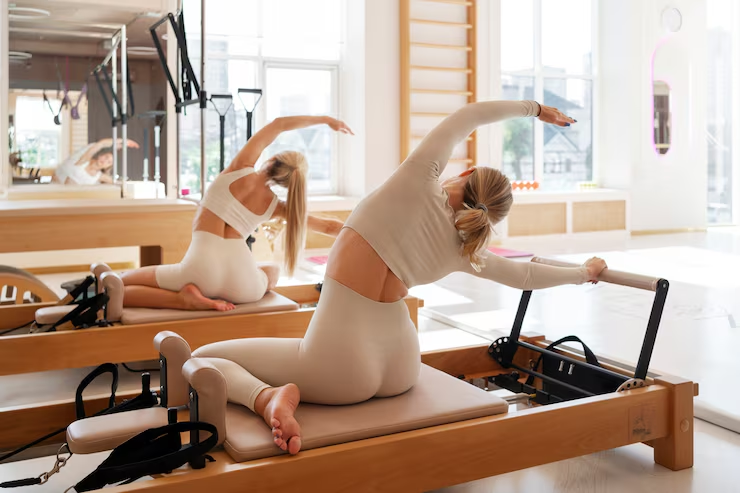
You can book with me at our Elsternwick clinic, or have a look at what we offer if you think Clinical Pilates might be a better fit for the strength side of this.
Book with Nicole


By signing up to receive email from core, you agree to our privacy policy. we treat your info responsibly. Unsubscribe anytime.




















.jpeg)